Croswell Opera House summer 2015 brings in record crowds

Buoyed by a record-setting production of “Mary Poppins” in June, the Croswell Opera House’s recently concluded Summer Broadway Season was its best-attended summer season this century.

“We’re proud of this season for so many reasons, but the best part of it is how many people came through our doors to experience the magic of live theater,” said Jere Righter, the Croswell’s artistic director.

The summer season attendance of 13,260 was the highest since 1998, when 13,661 people attended that season’s productions of “Brigadoon,” “1776” and “State Fair.”

The season numbers are influenced in part by a change in 2009 that added a May musical to the summer season, but 2015’s total was the highest since that move.

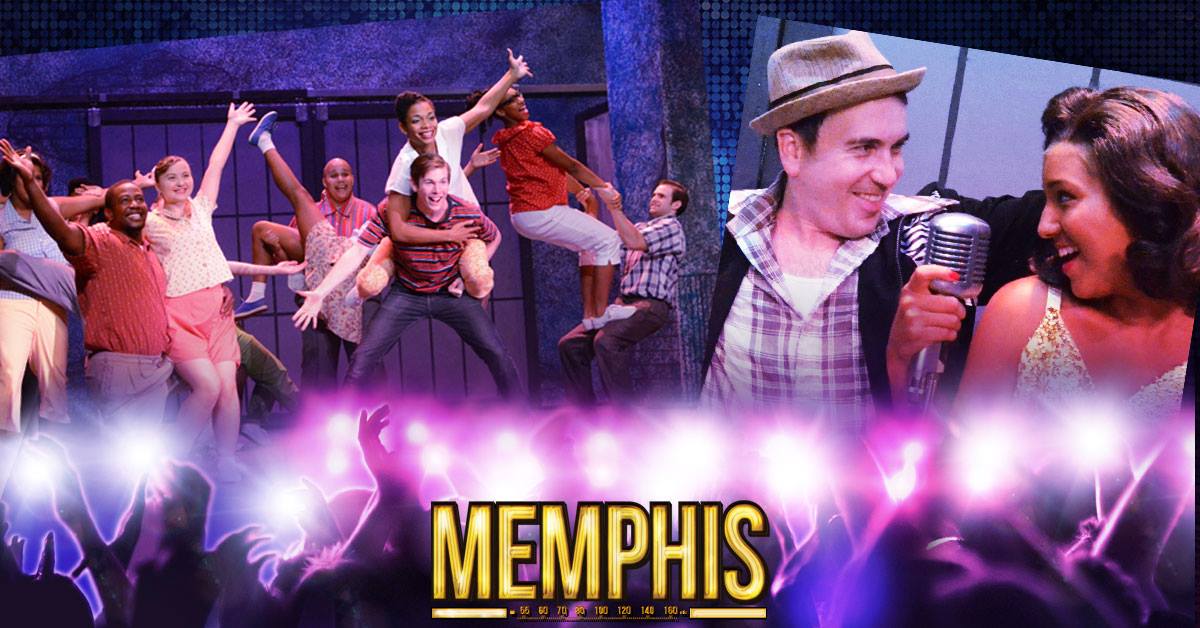
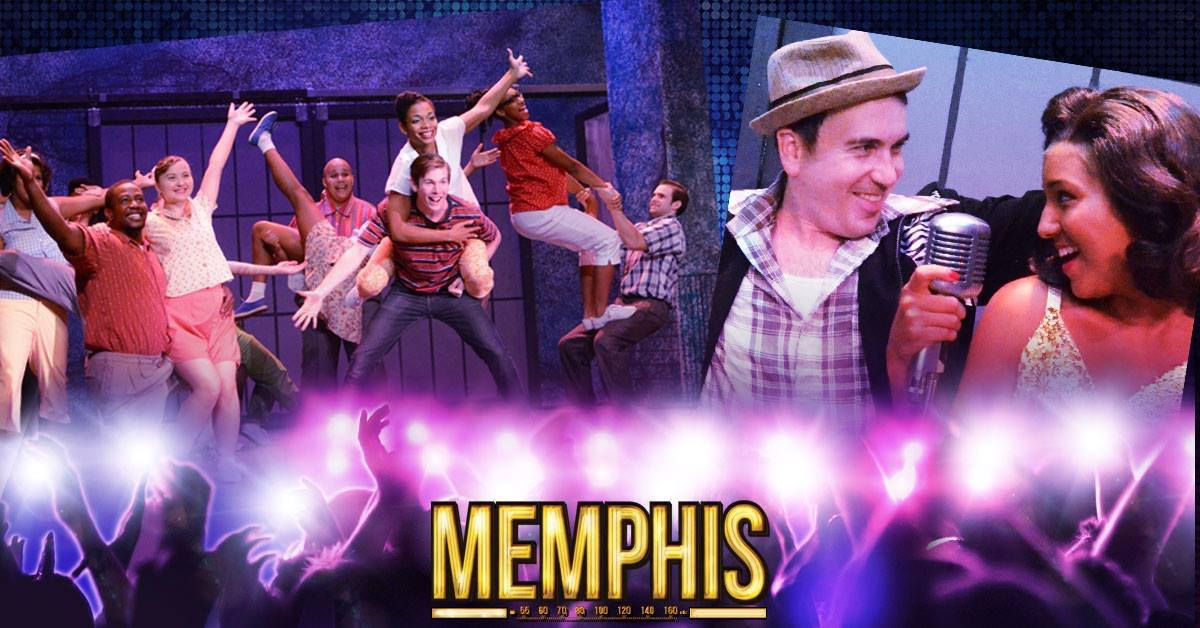
The 2015 Summer Broadway Season opened in May with Stephen Sondheim’s “Into the Woods,” followed by “Mary Poppins” in June. Two newer musicals, “Big Fish” and “Memphis,” rounded out the season in July and August.

“Mary Poppins” was the Croswell’s best-attended show since 1997, bringing in a total of 5,586 people over 10 performances.

“This was an incredibly ambitious season, but I’m so glad we took the risk,” Righter said. “Our audiences really proved that high-quality live theater is something that never goes out of style. Even today, when you can stream just about anything you want to watch over the internet, experiencing a live show in a historic theater is something that just can’t be duplicated.”

Summer season attendance hit a low in 2009 and has been increasing since then. The total number of events staged at the Croswell has also increased over the past several years, from 50 in the 2006-07 fiscal year to 75 in the same period for 2014-15.

“We’ve really been working hard to expand our programming and offer great entertainment for everyone, whether you’re a musical theater fan or not,” Righter said. “Along with making sure we’re always raising the bar on quality, that’s what will keep the Croswell at the center of our community’s cultural life for years to come.”

Memphis lives in me (Thoughts on closing)

11816281_746587206316_2476591433415373816_o


This isn’t a review. And it isn’t a random entry. This is truly an article about what “Memphis” means to me.

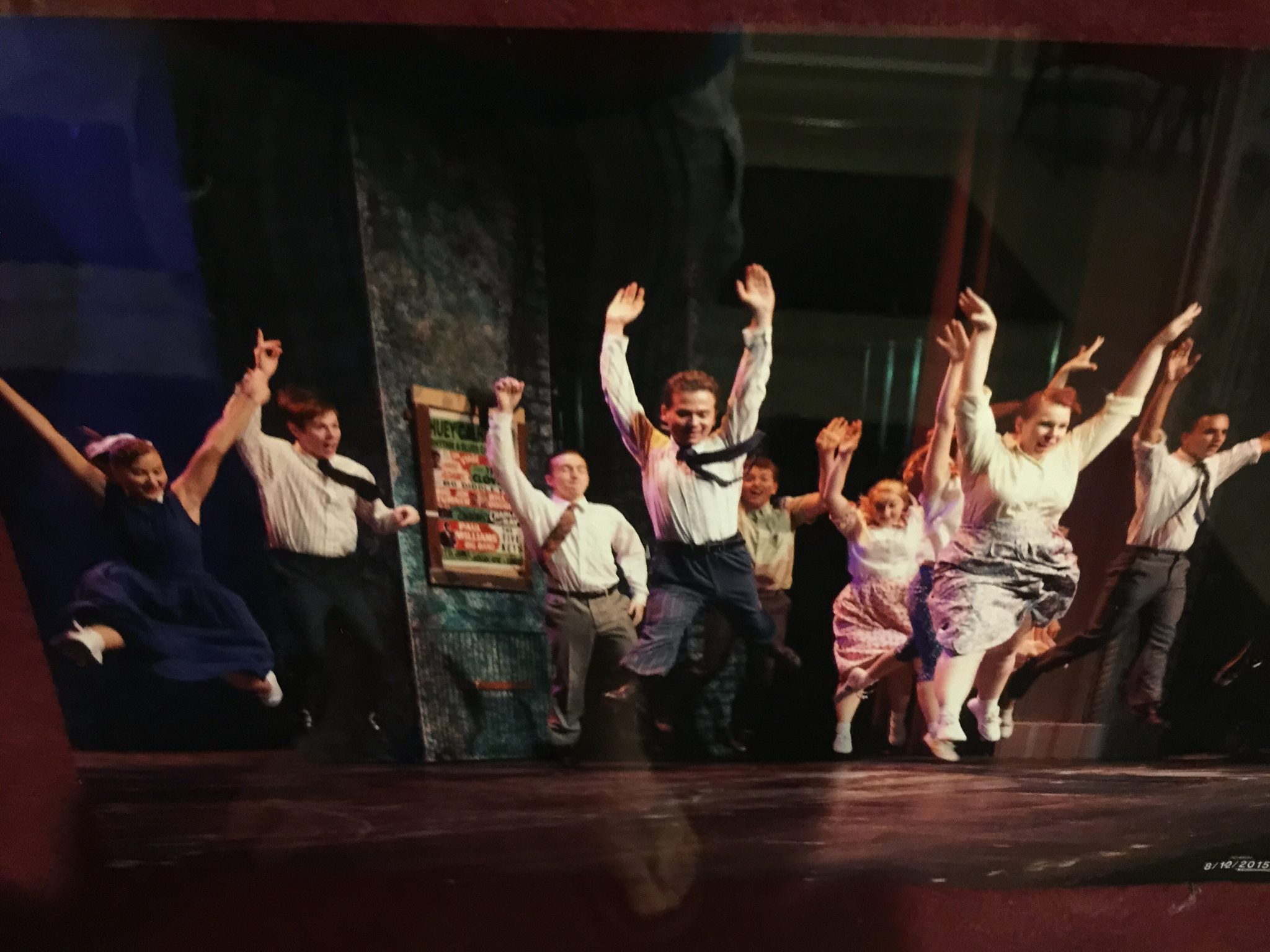
Yesterday, we played our final performance of MEMPHIS the Musical at The Croswell Opera House in Adrian, MI. It was a show that earned rave reviews (two were published right here!) and almost instantaneously became the major theater event of the SE Michigan/NW Ohio theatre scene. It was called “moving”, “electric”, “triumphant”, “joyous”, “energized”. But it also garnered the type of comments that meant much more: “dug deep into the talent pool so underutilized in this area”, “ spiritual”, “inspiring”.

Not familiar with the show? Well, it is about the birth of rock and roll, based on the black rhythm and blues roots of Memphis underground clubs, and how that sound eventually made it into the mainstream, primarily by way of teenagers and younger listeners who craved that type of upbeat dance music. It led to things like “the generation gap” and took place many years before the 50’s created in “Grease” or the early 60’s of “Hairspray”.

I had the honor of playing the supporting part of Mr Simmons, the radio station (later television station) owner — a great comedic part, and a risk-taker: sure, he was out for money, but he was a businessman who was open-minded enough in 1951 to hire a DJ that spun “colored music” (also known as “race music” at that time), and even permit an all-black television program down the road. When things spin out of control in Act II, he is astute enough to recognize that he needs to get his black performers “home, where they will be safe”.

But there is a secondary storyline — that of white disc jockey Huey Calhoun and his pursuit of black singer Felecia Farrell — and the racial tension that ensues in both the white and black communities when they fall in love with tragic consequences.

You would think that would be enough to keep you entertained, right?

Well, there is an even deeper level of what happened in Adrian this summer — and it was the miracle of a fully integrated cast at Croswell. 19 black cast members. An equal number of white. And that was a small miracle and one that seems like it shouldn’t be something we need to celebrate in 2015 — BUT WE DO.

While I consider Croswell the theater nearest and dearest to my heart I also do shows primarily in Ann Arbor. I’ve never done a show that had an integrated cast in this area. Years ago we did Big River at Ann Arbor Civic Theater with 4 black cast members (it needed about 15). On occasion I’ve gotten one or two diverse auditioners at shows I direct — in Ann Arbor.

Imagine the feat that took place in Adrian with Memphis. When the show was announced last fall, many people raised their eyebrows and thought, “what? where are they going to get that cast?” I hate to admit I was one of those people. In fact, I went up to the artistic director that night and asked her that same question.

But what happened was that people “believed”…starting with Jere Righter and the Board of Directors — they believed they could do it. Director/Choreographer Debra Calabrese believed she could get the cast. She used that belief to round up some of the most talented dancers in the area. Some were local to Adrian, others came from Toledo, in particular from schools of dance and fine arts. While those of us who had already been cast sweated out hearing if the show was on for sure, these people who believed were out there making the impossible happen.

We had an all-cast meeting early in the summer — and that initial meeting set the tone for what was to come. One by one, in groups, and in carpools, the cast arrived. Most had never been to Adrian before, let alone inside the Croswell Opera House. Some had never even been in a musical before. I looked around and found myself surprised and bewildered — there we were, one of the most diverse groups of colors, sizes, shapes, and ages.

Slowly people started talking — we introduced ourselves. We laughed. We sang a round of the curtain call song with our musical director Dave Rains who smiled and said “yeah, that will work”.

And we started to believe too.

The skeptics around SE Michigan were starting to become more vocal when I told them the show was coming together in a way beyond any of our dreams. It couldn’t be. Really? “I heard you’re using offstage singers” (yes, but so do other shows across America). “I heard your lead hasn’t even arrived from NYC yet” (yes, but when she did, the remarkable Tatiana Owens knew every single line of dialogue, blocking, and music). “I heard your spending a lot of time in dance rehearsals” (Well, duh, its a heavy dance musical). “I heard you have two separate casts” (no — we had an integrated cast of black and white performers who were all at rehearsals together every night – it was true that there are numbers that feature only the black cast, and others that feature only the white cast, but many of them featured both).

But the excitement was mounting. Tati arrived, and was instantly welcomed and enveloped by the cast. The show was becoming one big moving cog-and-wheel machine: scenes were landing with the correct emphasis on jokes and balanced with seriousness; dances were taking a shape that I have rarely seen on any local stage — when you have some of the finest dancers available, you can do some of the finest choreography — and they were, and it was.

But something else was happening — this integrated cast was becoming a tight, cohesive family. Black and white. Arriving early every night so that there was time to socialize. Lingering after rehearsals to chat in the parking lot. Grabbing meals together. Texting non-stop. Supporting each other on Facebook during the day — looking forward to the next rehearsal.

And everyone believed in this show, and this cast, and the quality. There wasn’t a single person who thought that this was not going to work (or if there was, I was certainly not aware of it).

By the time we got to tech week, we knew we had a hit. The emotions were flowing just right. The invited dress audience was ecstatic. The rest is history — the reviews were stellar, the ticket sales took off and the box office was swamped with calls and online orders and the sellouts followed. There was an outpouring of “Memphis-love”. I joked that my favorite thing was getting home at the end of the night and reading my Facebook feed each night after a show, which had exploded with Memphis posts.

And the audiences were just as diverse as the cast — certainly not 50/50 like the cast itself, but far more diverse than any other audiences I can ever remember at Croswell…and the energy was palpable. I could feel it from the stage. The cast thrived on every audience gasp, and ooh, and ah and reaction to kisses, and broken records, and by the second act it was simply electric in the house. Older cast members shared stories of discrimination and human rights. An older white man in the audience told our director that “he had no idea he had made it so difficult for people back then”.

Absolutely nothing creates that type of energy but live theater. It is why I have been involved with theater since being a young kid. I’ve directed 45 musicals, and I’ve probably been in about an equal number, and I’ve never felt what I did during Memphis, both onstage, and afterwards each night. Audience members stayed and wanted to meet the cast after the show. Audience members stopped us in the parking lot on our way to our cars to take selfies and talk about the show. Adrian was abuzz — reports came from people talking about the show at their hair stylists, at their nail salon, at the library, at Adrian College, and Sienna Heights, at Sauce restaurant. The two topics that dominated Adrian life were the new Buffalo Wild Wings opening near “the mall” and Memphis.

This is a good a time as any to thank the many many audience members that came and supported the show and were moved and told their friends and brought them back to see the show a second time. It is time to thank every single merchant downtown and around the area that displayed a Memphis poster in their windows. Its time to thank people for making everyone feel welcome. And it is time to thank Croswell for supporting something that will hopefully keep diversity alive and well on its stages and audiences.

If there is something I wish comes of this experience for everyone is that those young folks who are growing up in Adrian and thinking that they are somehow different and not welcome — stop, believe, know that you belong, and come audition for future shows. Discover your talents. Discover your uniqueness. Be a part of this big, organic thing that is theater and live performance.

There were more tears backstage on closing night (they actually started the night before already) than I have witnessed at other shows — and that was a tribute not just to the feeling that had been created on stage, and with the intensity of the rehearsal/performance process — but also because this big diverse family was performing together for the last time.

After the show, the tears flowed for real. Cast met audience a final time. Some lingered over a meal and drinks with friends, others went home. I met with a best friend and we couldn’t stop talking about the show. When he later posted a clandestine 10 second clip of the curtain call online, I watched it over and over, probably 20 times. I was having a hard time letting go as well. I felt I didn’t have closure. I wanted to keep these people in my life every single night.

I have 40 new friends, and I can’t wait to see what they do next — be that in Toledo, Ann Arbor, Adrian, or wherever. I can’t wait to see these folks again. We took a spiritual journey together. Cast, crew, orchestra, artistic staff. I know I will work with many of them again.

I believe this is the start of something wonderful.


Encore’s Extraordinary “Into the Woods” (review)

There is probably very little I can say that hasn’t already been written about Encore Musical Theatre Company’s Into the Woods — simply, it’s brilliant, original, and the best musical they have presented.

tn-500_intothewoods8

I, for one can tell you that I am sick and tired of Into the Woods — I’ve seen every one of its various Broadway professional versions and every local high school, junior high, community theatre and church-basement theatre has done it. But this production had me smiling in delight — and when a show that you know every single word and lyric to can do that after all these years, there is something special going on indeed.

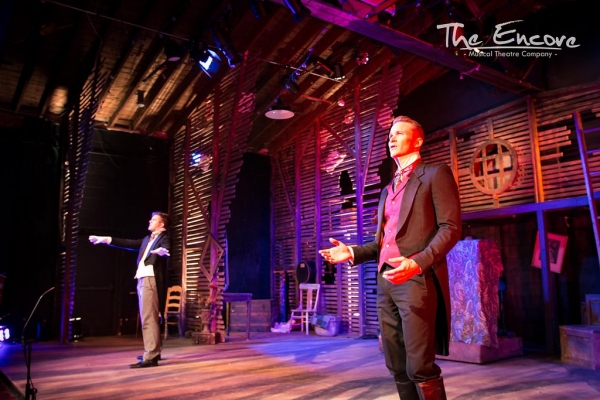
The casting is superior from top to bottom…from Jessica Grové’s superb Witch, to Baker and Baker’s Wife Matthew Brennan and Thalia V. Schramm, to Princes and Wolf (Peter Crist and Sebastian Gerstner…pictured above singing “Agony”). Throw in excellent performances by Jeff Steinhauer (Mysterious Man and Cinderella’s Stepmother – yes, you read that right), Katrina Stribley as Cinderella, Hannah Hesseltine as Little Red, and Elliot Styles as Jack. Top them off with fantastic supporting players Maggie Malaney as Rapunzel, Cassi Mikat and Maggie Williams as Florinda and Lucinda, Emily Rogers as Jack’s Mother, Ari Axelrod as the Steward, and a hilarious Tim Brayman as Milky White (yes, you read that right too).

Director Dan Cooney sets it all in the mysterious and shadowy eaves of an old attic — and the set design itself (by Sarah Tanner) adds a level of drama to the proceedings — light shines through the wooden slats, and illuminates glimpses of things happening throughout — the fully integrated ensemble cast are on stage almost the entire evening and serve as a greek chorus at times — emphasizing words, watching proceedings, providing sound effects. It all works remarkably well. Also fully integrated into the show is the onstage orchestra – with musical director/pianist Tyler Driskill moved around the stage as needed, and the remainder of the orchestra on stage left. The sound is remarkable.

Matthew Brennan’s choreography is organic and never overwhelms the numbers, nor the intended purpose of the staging. People here do not dance just to dance. Daniel Walker’s lighting evokes mood better in this production than anything I have seen at Encore to date. Sharon Larkey Urick’s costumes look lovely, and Anne Donevan has gathered eclectic and interesting properties that serve multiple purposes throughout.

Witness the creative use of light to create the Giant…the clever use of simple props to convey Milky White’s adventures…the “found properties” qualities of ladders and woven material that convey beanstalks and towers. It is flawless work.

Absolutely do not miss Into the Woods — you’ll leave the theatre feeling like you’ve seen something brilliant — and you have.

Very Highly Recommended — nay, demanded that you attend.

Into the Woods continues at the Encore Musical Theatre Company through August 30th. For tickets call 734-268-6200 or visit http://www.theencoretheatre.org. I understand there are still some tickets remaining for the final weekend.

Stellar “Memphis” at Croswell Opera House (Review)

And yet another rave! Thanks to Jamie Buechele-Beasecker for her guest review of Memphis, the musical at Croswell Opera House!

11218573_10154160683187222_6377370928013399730_o

———————

This past Friday I was fortunate enough to enjoy the Croswell Opera House’s production of Memphis. This musical is loosely based on the exposure of R&B music by DJ Dewey Phillips in the tumultuous segregated south. This production is, to put it mildly, a success.

I want to emphasize that when the summer season and Memphis were announced, a few eyebrows were raised, mine included. The Croswell promised that this show would be unlike any other, and the hype surrounding this production grew. My fears about the success of this show were completely dispelled on opening night, and the Croswell has delivered on its promise.

The vocal performances by all are consistent and fit the style and energy of the show well, however, there are some performances that are outstanding.

Dan Clair’s portrayal of Huey Calhoun is terrific, both in character and in voice quality. Derrick Jordan’s Delray Farrell is powerful and intimidating. Many other strong performances were delivered by Lydia Schafer as Gladys Calhoun, Ron Baumanis as Simmons, Anthony Isom as Gator, Domonique Glover as Bobby, Charles Waters as Reverend Hobson, and an incredible cast of talented dancers, ensemble members, and character roles too numerous to expound upon.

I saved the best for last. Tatiana Owens. This young woman’s performance is impressive, flawless, and left the audience both completely satisfied and wanting more. Owens’ vocal and character performance are equally powerful, and her telling of Felecia Farrell’s story is 100% believable. The chemistry between Owens and Clair is well-developed and makes the audience root for them, which, in turn, makes the audience angry at the injustice demonstrated by the racist bigotry and violence that has and is occurring in the world.

Deb Calabrese guided this incredible cast to build show-stopping dance numbers, emotional dramatic scenes, and an overall impressive production. Dave Rains worked his usual magic with the balanced ensemble numbers and orchestra. Krage’s costumes are appropriate to the time and hold true to the historical colors and designs of the ’50s, and David Nelms sharp unit set is well-utilized by the cast. Tiff Crutchfield’s lighting design is beautiful and appropriate for the space and set design. The typical sound complications did occur during Memphis, however, this is an issue that regular Croswell patrons expect, and a few poorly timed set changes did interfere with the audiences view at times. Neither of these issues affected the overall stellar quality of this show.

There are moments during this production that are emotionally difficult to watch, and this strongly contributes to the rounded-out complexity of Memphis. Go see this show. Experience the emotional roller coaster that this outstanding cast delivers. During the final scene, I turned around in my seat. What I saw brought tears to my eyes and swelling to my heart. A full house of engaged, excited faces. Memphis is a show that I could not wait to stand up for. This show more than deserved its standing ovation, and I was happy to oblige.

MEMPHIS Rocks Adrian’s Croswell and it is more than worth the trip (Review)

Because I am in this production, MEMPHIS The Musical, at Croswell Opera House is being reviewed by guest reviewer director/choreographer/producer Patricia Mazzola. Thanks Patty!

11896299_10154160211477222_5220427503491236739_o

—————-

I had the fortune of seeing the opening night performance of MEMPHIS the Musical at Adrian’s Croswell Opera House. Based loosely on real-life Memphis DJ Dewey Phillips who played black blues and R&B for people of all races to appreciate, taking enormous chances in the segregated south of the fifties. You, too, will be taken by this production.

The show has it all! The performers are so good you truly get lost in this story. Be ready to experience surprise, anger, laughs, love and genuine joy. There are excellent performances by Dan Clair as Huey Calhoun and Tatiana Owens as Felicia, but supporting roles are just as strong. Lydia Schafer plays Huey’s mother, and it is a gem of a musical comedy role expertly played. Derrick Jordan sings a remarkable Delray, Felecia’s older, protective brother. There’s a fantastic dance number from Dom Glover as Bobby (“Big Daddy”) and Anthony L. Isom sings a stirring “Say a Prayer” as Gator.

The choreography is strong and prominent, featuring a half-black half-white singing and dancing ensemble cast. This is the type of dance you rarely see on local stages and director/choreographer Debra Calabrese keeps everything flowing at an exciting pace. The audience eats it up and you can quickly see why this musical won all those Tony Awards a few years ago. It is an exciting evening of musical theatre, but one that has a strong message to convey.

The storyline draws you in and keeps you there — as it explores the birth of rock and roll and its rhythm and blues origins in Memphis’s black Beale Street clubs. Through a series of coincidences, Huey manages to secure a job at a popular radio station (Ann Arbor’s own Ron Baumanis plays the station manager as a “gruff, obscenity-spewing teddy bear” — credit to Wendy Wright for that one). When Huey falls in love with black singer Felicia, complications ensue and the relationship faces obstacles in both the white community as well as back on Beale St. Just as current as today’s racial tensions and rebellious music preferences, it’s the younger folks and teens who take to the new beat; and by the time the musical reaches its electric final number, “Steal Your Rock and Roll,” everybody within the walls of this majestic theatre are with them.

Praise to Dave Rains and his 9-piece onstage orchestra for some truly excellent musical work. Throughout the evening, the show’s driving force is the original musical score.

Several times I thought the story hit the highlight, only to be taken further. It is not your typical boy-meets-girl musical. You won’t want it to end and will find yourself dancing and singing your way to the car. You’ll be hard pressed to find any local production of this musical with these production values.

Memphis continues at the Croswell Opera House through August 23rd. croswell.org or 517-264-SHOW for tickets. Don’t miss it!

Very Highly Recommended.

How I select musicals to direct (Musical Theater class 201)

musical-theatre

Awhile back, someone asked me how I pick musicals that I would like to direct. I promised I would do a follow up to my post on good shows for large venues vs small venues with a personal selection article — so here it finally is. And its timely as I am doing just that for a local theater for next season.

I’m looking at a proposal right now for the 2016 season, the 47th musical I would be directing. This proposal will be to a large well-established community theater with virtually no budget for their productions but a huge warehouse of stock in props, costumes, and generic set pieces (platforms and flats). This company also has a wealth of tremendous talent, not just locally, but when the show is right for the zeitgeist will attract great performers from a 25-30 mile radius. The strength here is the actors, not the scenic aspects.

From a personal background, I love big song and dance shows (the more tap the better), but I also like new works and I feel its important to bring some of these newer shows to the local audience — while some here might have seen the show in NYC, or on tour, it is more likely that the majority of our audiences will not have seen the show, though might have heard about it or seen it on the Tony Awards on tv. Hence, I’ve brought musicals like Next to Normal, Steel Pier, Bonnie & Clyde, The Wedding Singer, My Favorite Year to different theaters over the years.

VENUE:

The first thing you need to be aware of is the venue that the production will be performed in. Is it a black box? Is it a proscenium theater? Does it have a large stage, or a small one? Is there backstage storage space? Is there a fly system? If it has a fly system, is it a full fly-system or merely an access fly system? Where are the entrances and exits to the stage? Are there stairs? Are the theater aisles usable? What type of floor does the venue have?

EXISTING STOCK:

What does the theater own? Do they have a lot of costumes? Set pieces? Or do they have very minimal stock (meaning everything would have to be built from scratch) Do they have a lot of props? Or does everything need to be collected from scratch? Do things need to be rented? Does it need rental drops? Is there a budget for drops (they run 350.00 a drop or more for one week). Does the theater already own some pieces that can be incorporated?  How intensive is the set — how much building will it require? How easily can it be set up, moved, loaded, unloaded ,broken down? How many people do you have on your staff?

SHOW REQUIREMENTS:

Are there specific needs for your show that you feel are vital, or form the essence of the show? If you are doing a production of Bonnie & Clyde you need some resemblance of a ’34 Ford Roadster or you shouldn’t be doing it, its that vital to the show. Same with Shrek — how are you going to do that dragon? Or Miss Saigon — that helicopter scene. Or Les Miserables — that barricade. How costume intensive is the show? Thoroughly Modern Millie is going to cost you a lot more for costumes than Next to Normal. You need puppets for Avenue Q and Carnival.

SET AND COSTUME SHOWS;

Be aware that some shows were specifically designed to be set and costume shows — if you do not have the budget for sets and costumes stay away from shows like My Fair Lady, Hello Dolly, Camelot. In general, most (though not all) of the older “classic” musicals of the 40’s, 50’s and 60’s are set-and-costume shows. Audiences at that time expected large gorgeous sets and many costume changes. Most of these shows were period, so modern dress doesn’t cut it. It wasn’t until Cabaret came around that producers started to think out of the box and the “look” of shows started to change somewhat.

AUDITIONERS:

Who will be auditioning for your show? Do you have a large pool to draw from? Is it limited? Is it mostly women with a handful of guys (sometimes husbands/boyfriends with limited talent but willing to be drafted? That gives you bodies, but no support). Or do you draw from the best of the best? The larger your pool, the more interesting shows you can present. There are many musicals that are written for a large male cast with a handful of women — this opens up some of those options, otherwise stay away from them. Shenandoah has 18 men and 2 women with 4 chorus women that sing one song. Kiss of the Spider Woman has 18 men and 4 women. LaCage aux Folles has 20 Men and 6 women. Camelot has one female lead with a chorus where women do virtually nothing. Bonnie & Clyde has three female roles and 3 chorus roles, but also needs 12 men.

ORCHESTRA:

What size orchestra can your venue accommodate? What are the show’s orchestra requirements? What’s your orchestra budget? Where will the orchestra be located? Is it onstage, in a pit, offstage right, offstage left, an aisle or vestibule inside the house? When I did shows in Ohio, the orchestras were local volunteers and/or existing groups. Here in Michigan every single orchestra member expects to be paid, even in community theater orchestras. (Ironically, they are the only paid members of virtually any community production in Michigan, but that’s the nature of the beast here — and that’s a discussion for a different post.)

LIGHTING AND SOUND NEEDS:

The larger your orchestra, the more mics become a requirement. Did you know that every show written post 1975 was written to be mixed on a sound-board on Broadway? That means every single actor was on a body (or standing) mic, and every orchestra member is on a mic, and that the sound technician “mixes” this sound at the booth so that the audience hears a well balanced vocal and music. It sounds like your cast recording. Before that, orchestra parts were written to drop in volume while vocalists sing — they were even orchestrated differently…strings and woodwinds accompanying the singers, while brass would pop in during non-singing portions and dance breaks.  Do NOT plan a musical that has large sound requirements if you do not have microphones and a decent sound mixer.  Lighting plays an important role in many shows — you can’t do the finale of The Full Monty if you don’t have spot-on lighting effects. What is your equipment? Do you need to rent anything? Do you have follow spots if the show requires follow spots? Do you have a lighting technician that understands how to light the space you are renting or using? Do you need special gobos? If using programable/movable cyberlighting, do you have time to program them for your show in the limited time available? If you rent a star curtain, do you know how to get it to work and plug it into your dimmers and computer system?

SOMETHING NEW: PROJECTIONS:

Many current day musicals incorporate projections as their set design — these requirements can range from minimal to substantial. Woman in White used 100% projected scenic images on stage-wide television screens. Big Fish used projections for all of its special effects, which are plentiful. Projections are also vital in Smile, Bonnie & Clyde, Chess, Carrie, Tommy, or any other musical that has visual needs similar to those.

YOUR AUDIENCE:

I’m going to be perfectly honest that the one thing I do not consider in selecting a show is an audience, that is IF the show is a proven show. Audiences don’t always want to see the same old thing, and if you have a great production of a lesser known show, word of mouth and reviews will sell your tickets. Some theaters do not have that luxury. If all you have is local church-goers in your church-basement theater, then you can’t do shows that don’t appeal to that audience. The particular theater company I am currently preparing my proposal for has a longtime audience base, but also has many new audiences members per show, depending on interest in the show itself. The subscribers have seen the good, the bad, and the ugly for decades, so they are the least of my considerations. This theater desperately needs to attract new audience members — people who might come back again, donate a few bucks, or even audition or participate themselves down the road.

CURRENT TRENDS:

Keep in mind a few current audience trends…people no longer purchase “season tickets” for the most part — they purchase individual shows for those they are interested in…reputation counts: if a theater presents a show that has high set-and-costume requirements and your audience knows that your theater is incapable of presenting high set-and-costume shows, they will not attend…younger actors (in the 18-25 range) are more likely to understand dance than any other group before — they grew up on shows like High School Musical and watched Glee on tv, and are less inhibited when it comes to dancing, because they did so in their high schools, in choir, and with their friends. Contrast this to the generation directly older than that (the late 20-s to late 30’s) where dancing was not a large part of their upbringing…tap is no longer in vogue — you’ll find fewer and fewer folks who studied tap in their high schools or college. You’ll find a few really good tappers, and lots of non-tappers. If you have guys in their 20’s who know how to tap, you will find they get cast in virtually every musical they audition for because I consider them the “golden few”.  If you plan to do a musical like My One and Only or 42nd Street, you better make sure you have enough adult tappers because there are no teenage or kids roles in either one.

POLITICS:

Every single theater has politics. I haven’t found one that does not. This ranges from interference from board or staff as to who should be cast in particular parts, to micromanagement of who should get a solo and who should not. I’ve experienced producers insisting intermissions are added to shows that don’t have intermissions so that concessions can be sold.  I’ve personally been pretty lucky, as journeyman director, that I can cast whom I want and do what I want, and/or to not work for a company again down the road if I don’t want to. But there have been plenty of actors and actresses who have decided I am persona-non-grata after not casting them for one reason or another.  You need to have a tough skin if you are a director.

WHAT ARE THE OTHER LOCAL THEATRES DOING:

Believe it or not, audiences for shows DO cross over — if your local university does Addams Family, and you do Addams Family, and the next suburb over does Addams Family, pretty soon the trickle effect comes into play and the 4th theater that also does Addams Family is facing the law of diminishing returns — your audiences have seen it. Don’t schedule the same shows everyone else is doing. Shows that currently fall into this category are (Addams Family), Legally Blonde, Spamalot, Les Miserables, and Into the Woods. Shows that have traditionally been done to death are Grease, Guys and Dolls, and Annie.

SHOWS THAT HAVE BEEN IMPROVED OR KILLED BY MOVIES:

Right now, Les Miserables, Chicago, and Into the Woods are overdone and it doesn’t help that their movies were so popular. Just because Meryl Streep did it doesn’t mean you should do it. The opposite also occurs — the movie version of Nine was so terrible that audiences would not at all benefit from having this show done right now. Its a shame because it is one of my favorite musicals ever.  Be extra careful with musicals that have great DVD’s available. In addition to the aforementioned, both the tv versions of The Sound of Music and Peter Pan are on DVD. Legally Blonde was shown four times a week for three months on MTV. Memphis has a HD recording of the original Broadway production. Don’t stay away from these shows, but beware that audiences will have concrete expectations of what they have seen  (sometimes dozens of times) and what they expect from your production.

MARKETING:

Another consideration is marketing opportunities. Is there a community organization that you can buddy-up with? Is there a local retail store that would love to donate some clothes in exchange for free publicity and maybe a sponsorship? (A great way to get those black and white costumes for the women in Nine by the way).  Does your community have a lot of banks? Would they be willing to place ads to support Bonnie and Clyde? Think about the opportunities you have out there.

PUTTING IT ALL TOGETHER:

So, remember that theater proposal that I am putting together? What am I finally going to propose? Well I’m not sure yet, but here is the general idea and the thinking behind each. Which will I finally propose? You’ll have to come back later to find out.

Proposal A) A recent modern musical that has the orchestra on stage, a unit set with ramps and staircases, and moderate costuming and projection needs. Its a story that is fun and audiences have not seen this show in Ann Arbor. Its a very heavy song and dance show. The talent certainly exists to cast this show easily. What’s the main concern? It needs a really strong college-age male lead that can sing tenor. But with a half-dozen universities within a 30 mile radius, I’m not worried about casting.

Proposal B) A standard from the mid-70’s that has minimal set requirements, minimal costume requirements, and was a show that every single theater used to do ad nauseum but hasn’t been seen on an Ann Arbor stage ever. The downside? It has 18 men and 6 women, and only 2 of those women have parts. Plus side – audiences love it and its a throwback to older more audience accessible musicals. Its also in my top 5 favorite musical list and I have directed it before.

Proposal C) A modern classic musical — that is, one that was newly rewritten for the stage a decade ago, but uses an original 40’s story as its script and score. Its heavily dance oriented, but has moderate set needs that can be pared down to minimal, especially if projections and drops are added. The downside? It runs 2:45 minutes, and for me, that’s a long long show. And its kinda old fashioned with a limited emotional payout for that length of show.

Proposal D) A recent Tony winner for revival of a musical, it has multiple great roles for cast members, and has name recognition. This particular theater did this show 23 years ago so its high time for a revival. It has minimal set needs, but heavy costume and vocal needs. The downside? It has no ensemble, so it has a specific and limited cast size.

So what do YOU choose?…Stay tuned. And happy musical theatering!

Croswell’s Big Fish will charm you, then tear your heart out (Review)

Croswell Opera House in Adrian Michigan continues its very strong summer season with the new Broadway musical BIG FISH, based on the movie and the book by Daniel Wallace. Book by  John August, music and lyrics by Andrew Lippa (Go Blue!)

Web_920_350-1

Disclaimer right off the top: I adore this musical — I saw it in pre-Broadway previews in Chicago, and then the very reworked piece on Broadway, and I am directing it for Ann Arbor Civic Theater in Spring of 2016.

The production that arrives at the Croswell is a solid, well designed, well-acted evening of theater — and this is one of those rare “new musicals” that has a strong book-driven story and a great new score. Edward Bloom, lifelong teller of tall tales which include himself as the hero in each one, has grown estranged from his now-grown son (who is getting married and expecting a child of his own). When Bloom Sr is diagnosed with terminal cancer, his son sets about trying to find out the truth behind the tall tales, and who his father really is. It has the inevitable ending — but what gets you to that point is the most interesting part of this show.

Jonathan Sills vocal directs and conducts a superb orchestra, and keeps the very tricky score flowing along without missing a beat. The production was directed by Betsy Lackey and choreographed by Jessica Adams.

Eric Parker is tremendous as Edward Bloom, easily swinging back and forth from younger Bloom to older Bloom. His son Will is very nicely played by Dale White who carries a large part of the show, and does so well. His wife Sandra is played by Kyrie Bristle in another wonderful vocal performance. There is some excellent support work here as well: Stephanie L Stephan as the Witch who shows Edward his path – Benjamin Rosebrock as Karl the Giant whose story brings surprising tears at the end of the show himself – Karl Kasischke as Don Price, high school blowhard and competitor for Sandra’s hand in marriage – and John Bacarella as a circus owner with a big secret.

There are plenty of surprises in the tales as they weave together the past fantastic and the present discord to what is one of my favorite endings of a Broadway show in a very long time. On the way you get witches, giants, tapping girls, elephants, circus canons, and some wonderful things, and you’ll feel very much like son Will trying to make sense of this unique man on his journey. From the first scenes you know that he has “seen how he dies” in the witches crystal ball — and what a journey it takes to that point!

What makes the show resonate is that every single person in the audience can relate to something; the romance, the death of a parent, marriage, relationships, unknown paths, the mysteries of growing up, the circle of parents, sons, and daughters.

Not everything is smooth sailing: Sound occasionally drops out, and this is noticeable during large crowd scenes. Speaking of large crowd scenes, like Mary Poppins a few weeks back, the show has a few too many people up on that stage, and in one instance a very awkward dance sequence that came out of left field. Pacing is inconsistent, and I thought some of the action was a bit too far upstage away from the audience. Sometimes a few of the songs feel a bit stagnant, when there should be some movement on stage — there’s a lot of emotion to contain in some of these pieces, and at times its contained a bit too much.

But then you’ll be blown away by simple moments such as Bristle’s “I don’t need a roof” and all is forgiven, and the hankies come out, and they stay out from that point to the stirring finish.

Big Fish continues at the Croswell Opera House through July 26th.

I am supposed to mention that Steven Kiss and Becca Nowak did a tremendous job handling their concessions duties.*      (*Note: I did not purchase any concessions)


A Midsummer Night’s Dream…Michigan Shakespeare Festival 2015 Off to a Great Start

Okay, truth be told, I should not review shows at the Michigan Shakespeare Festival, since I am the Vice Chair on the Board of Directors of the MSF. But that doesn’t mean I can’t tell you about it anyway. And its my blog. So if it happens to be a great production I can mention that, right? And not having had a hand in any aspect of the production (in fact, I saw it for the first time last night), I have some thoughts…

The MSF 2015 season opened with a rousing production of A Midsummer Night’s Dream last night. Swiftly and expertly directed by MSF Artistic Director Janice Blixt, the production times in at 2.5 hours with the intermission, and there’s a terrifically talented cast onstage.

Shawn Pfautsch is back! And he plays an impish and athletic Puck — another amazing role for him (some will recall he played Hamlet last summer for MSF). He effortlessly delivers his lines while romping around the forest-set, and he’s hilarious to boot. But its expertly crafted — watch one of his exits in which an invisible force pulls him offstage by one leg for example.

AMND is one of my personal Shakespearean favorites — not because its his most interesting, or funniest, or even most creative…but because it really is a showcase for actors and wide-open to the interpretation of directors. Everything in this production looks great, and the acting can’t be beat.

There are some lovely pairings here — David Blixt and Janet Haley as Oberon and Titania…Lydia Hiller and Brandon St Clair Saunders as Hermia and Lysander…and Laurel Schroeder and Milan Malisic as Helena and Demetrius.

The Rude Mechanicals are humorously played by Alan Ball (Bottom), David Turrentine, Dan Wilson, Edmund Alyn Jones, Eric Eilersen and Andy Head.

Matthew Fahey, Annie Keris, Daniel Helmer, Rick Eva, Sarah Pidgeon and Evelyn Blixt round out the wonderful cast. The well-known dialogue comes trippingly off the tongue across the board, and as usual at MSF the action is staged cleanly and it is all easy to follow, even for Shakespeare newbies.

It all looks and sounds great on Jeremy Hopgood’s set, with Renae Skoog’s costumes, Diana Fairchild’s lighting, and Kate Hopgood’s sound design and musical composition.

Its a great way to get the MSF season of too a terrific start — Henry IV (both parts) and Sheriden’s The Rivals follow with openings next weekend. All three productions move to the Village Theater on Cherry Hill in Canton two weeks from now.

MichiganShakespeareFestival.com for tickets. In repertory through August 16th.

Wedding-filled “Always a Bridesmaid at the Dio (review)

SAMSUNG CAMERA PICTURES

Watching a Jones Hope Wooten comedy is a bit like sitting back and binge watching four episodes of your favorite new television sitcom.

Jessie Jones, Nicholas Hope and Jamie Wooten, collectively know as Jones Hope Wooten, have written many comedies, including the Dio’s current offering “Always a Bridesmaid” (one of their most performed shows, after “The Dixie Swim Club”, which the Dio has also presented in the past). Coming from the rich world of television comedies (including The Golden Girls), their writing is always crisp, easily relatable, and truly funny.

And when its presented as well as the Dio’s current production, there is nothing better than sitting back and letting everything just entertain you for a few hours. Here, we follow a group of women over 7 years and their weddings — they have made a vow it appears that they will always appear in each others weddings as bridesmaids. It is instantly recognizable material, from the reluctant no-longer-a-debutante to the drunk bride’s speech at a wedding. And there are more weddings over the years than there are characters.

Steve DeBruyne directs this swiftly-paced comedy and the one-liners fly fast and furious. Anne Dilworth gets things started as the tipsy bride and ties together each segment with a short introduction that becomes increasingly boozy as it goes along. Her Mother is played by Nancy Penvose who is quick becoming one of my favorite local actors. She doesn’t miss a beat as the shenanigans of four separate weddings ensue – each the subject of subsequent scenes of the play . The entire ensemble cast is terrific, including Fran Potasnik, Sonja Marquis, Wendy Hedstrom, and Amy Morrisey.

The simple but appropriate set is designed by Matthew Tomich, as is the lighting design. Norma Polk does her usual excellent work with costumes — and wait till you see what she has in store when “elegant French dresses” are called for in Episode 3, I mean Scene 3.

Chef Jarod has prepared a wonderful dinner to start things off on the right foot — of his delicious chicken, vegetable lasagna, mixed vegetables, and an excellent salad bar (you could stuff yourself on the salad alone, with its mixed meats, cheeses, and other toppings). Dessert is served during intermission. (Don’t forget to tip your waiter/performer!).

The Dio continues its string of excellent productions and tasty (filling) dinners with “Always a Bridesmaid”, and you will have a great time. The production continues through August 2nd. Tickets online at diotheatre.com or by phone at 517-672-6009  177 E. Main Street, Pinckney, MI.

Recommended.

Why I’m not recommending an Apple Watch for TBI clients (Updated post watchos2)

To start — let me just say that this article talks about why I am NOT recommending an Apple Watch for brain injured clients at my clinic.

s42sg-sbbk-detail

For the past week, I had the opportunity to try out an Apple Watch Sports model — not because I want one or will ever use one (I don’t wear watches — didn’t Smartphones do away with wearing watches?).

But that’s not what this is about — I specifically tried out the watch to see if there would be any value-added for my brain injury clients who already use iPhones, iPads, and Androids as their day-to-day notebooks/tools/memory devices.

This, in short is my experience.

Look and Feel:

The watch looks and feels great! I had a 42mm sport model which has a soft polyurethane band (which actually caused a rash on my wrist, so apparently its not for me anyway). Its neither too large nor too small. Mine was space grey with a black band — and it was clear and easy to see the watch face, except in full sunlight – which made it near impossible to read, and if wearing polarized sunglasses completely impossible.

From a hardware/software point of view — the small icons used to open programs are too small. Similarly, whenever prompted to enter your password (which is every time you take it off and put it back on) the keys are too small to accurately hit the numbers easily and often took several tries.

The phone has haptic feedback – that is, a small vibration taps your wrist when you get a notification or an alarm goes off. I set this to the strongest setting and could still barely feel it. I think someone who might be even slightly sense-impaired will feel nothing at all.

Volume for alarms and alerts is very low, even when set to the highest setting. The only sound cues I found that were loud enough were when my phone rang and the watch notified me of the ringing.

The one thing I did very much like was the various watch faces — from simple clock to more complicated information screens and even a Mickey Mouse tapping his foot. For the record, while Mickey looks amazing, you can not tell what time it is between 4 pm and 8 pm because the dancing feet interfere with seeing the clock’s hands.

Setting up the Watch:

Setting up the watch is difficult and it has a long learning curve. It doesn’t work like an iPhone, and requires learning a new set of responses and routines. Most of my clients would not be able to set this up on their own without a therapist helping them. In fact, most of my clients will be so frustrated by the systems required to make it all work that they will stop using the watch within hours and go back to their iPhones and iPads.

Notifications and Alerts:

Some watch faces provide better information than others — the one I found most useful was one called “Modular” in which you could set the time, see your next upcoming appointment, the temperature, and other settings you might choose. The other watch faces were too small for any type of realistic cognitive strategy use.

Dependency on iPhone 5 or 6:

Your new Apple Watch will do NOTHING if you do not have your iPhone 5 or higher in your pocket or within two feet of your watch (i.e in a purse or messenger bag). You really think of the Apple watch as an external display for your iPhone. No iPhone, the only thing that works is your watch — and it does not display any calendar events or anything else without your phone nearby.

Apple states that notifications (i.e. you have a test message, or facebook message, or reminder) should show up on your Apple Watch a second or so before your phone. I found this was not the case and my iPhone always sounded or vibrated in my pocket first, and then I got the haptic tap and alert on my watch.

Responding to them requires tapping on short pre-programmed responses (“yes”, “no”, “I’ll call you later”, “I’m running late” etc) and not practical for brain injury purposes. You can dictate a response with Siri. I found accuracy to be very poor and get much better dictation results from my iPhone.

Software;

Apple’s proprietary software works beautifully out of the box. I did not find a single third-party application (and there are now thousands of them for the Apple Watch) that was not laggy or unreliable.

In general, you load the applications on your iPhone, and a sync process copies the Apple Watch version over to the watch wirelessly. It works well though I found several programs (such as Shazam) that “failed to install” and ended up requiring deleting.

As mentioned above, it is difficult to manage the small icons on the home screen, which I frequently ended up touching the wrong program and opening stuff I didn’t need.

A special selection of “Glances” can be arranged on your phone for quick looks. These are tied to the full version for any type of updates. Example, weather comes into your main app, and a quick “glance” of it can be seen on a special screen with a couple clicks. Again, Apple’s own programs work fine here. Third party software is buggy and unreliable. For example, neither my MLB scores updated, nor radar, nor map updated appropriately, and location services are poor. I was getting Romulus Michigan updates hours after returning to Ann Arbor. By the time the spinning dial finally starts to show your results, I had long pulled out my iPhone and checked my updates there instantly.

Day to Day Use:

I struggled the first few days with the watch — as I said, I hate wearing watches and I had to make a conscious effort to put it on. It took at least a couple days to start feeling comfortable with the different touches, the crown, the buttons. So how did the day to day trial go?

Well, I mostly found myself using the Apple Watch as a Watch — what time is it? That was always instantaneous.  — PASS

I loaded my Delta boarding pass on my phone and it copied to my Apple Watch, It worked well in Detroit — though it was awkward to turn my wrist upside down to get it to read in the scanner. It didn’t work at all at the other end — the scanner at the opposite airport required you to put your boarding pass UNDER it and there was insufficient room to put your wrist let alone wrist with watch under it. I ended up pulling out my iPhone and using the boarding pass on that. — FAIL

Sunny day — FAIL

Sunny day while wearing polarized sunglasses — COMPLETE FAIL

Movie Theater — SUPER FAIL…..every time you move your wrist in the movie theater the lighted watch face brightens — annoying to me so much I ended up taking the watch off and putting it in my pocket because if it was annoying me, I know it was annoying my neighbors.

The only way to turn off the volume when at a movie or anywhere else is to put it in Airplane Mode. It is supposed to mimic what you have set on your iPhone but I found that was not reliable when a phone call rang through on the watch while everything else had been silenced on the phone. Too many settings that need to be adjusted for a typical user.

Glances — Partial Fail, partial pass. Flicking my wrist to see the updated Tigers Scores should have been a no-brainer (25 years ago there were already digital watches that updated MLB scores in real time). Instead, it was so laggy that if I wanted to see it instantly I needed to check my iPhone — FAIL….but checking upcoming appointments on the glances worked just fine – PASS.

Note — no notes on the Apple Watch. You can’t just pick it up and use Siri to dictate yourself a note because notes don’t exist on the Apple Watch — FAIL

Coolness factor — PASS….people seemed genuinely interested in seeing the watch, checking it out, and trying it on. Here’s the rub — once they tried mine on, I had to open it with my password.

Apple Pay — PASS — and maybe one day this might be the watch’s redeeming factor — Apple Pay worked like a charm at the very few places that accept Apple Pay. Because it is so hard to organize and use your passes though, I would recommend you add no more than one single default credit card to your Apple Pay queue on the watch.

Conclusion:

The Apple Watch is not ready for prime time, and quite frankly, I am not sure why I would personally ever use the watch. But I can very clearly state that for cognitive rehabilitation purposes, the watch will not be usable by the average client because of its difficulty in set-up, steep learning curve for learning usage routines that are DIFFERENT than those used on the iPhone and iPad, and its unreliability is application usage. It is also too quiet when notifications and alarms go off, and haptic feedback is not strong enough. In short, it doesn’t work to “nag you” with memory cues the way an iPhone or iPad does.

It is, however, a gorgeous watch by itself. And for that, you don’t need an electronic gizmo that needs charging every single night.

UPDATE September 21, 2015:

The watchOS 2 arrived today. After a (long and error-filled) installation process, I find that the new OS adds nothing to the day to day functionality of the watch for Brain Injury cognitive strategy purposes. I continue to not recommend the watch as a cognitive strategy.